The first reference to workings at Kelly dates from 1797, when the landowner, George Wills, leased to John Pinsent for 21 years a 'certain mine of black lead or some other substance'. The black lead was, in reality, micaceous haematite, an oxide of iron, which had a variety of uses.
The first official record of the mine is in 1877 when it was leased by the Kelly Iron Company with Captain W. H. Hosking in charge. For the next 13 years only two or three men were employed, production averaging some 25 tons per year. In 1892 the mine was advertised for let by J. Dadd of Kelly and was stated to "contain several valuable lodes and to be equipped with a waterwheel and stamps for ore-dressing".
Up to 1900 the mine appears to have remained idle, until the Scottish Silvoid Company of Glasgow took over the lease with Mr. A.W. Govan as manager and Mr. Samuel Hill as mine captain. In 1901 thirteen men were working at Kelly, probably mainly engaged in development work as production in that year was only 20 tons. From then on output steadily increased, reaching a peak of 202 tons in 1907 in which year the photograph at the top of the page was taken of the Kelly miners standing in front of the shaft.
Click on the thumbnail below for a map dated 1905.

In 1913, nine men were recorded as working, 4 underground and 5 on the surface. The Ferrubron Manufacturing Company, then working the much larger Great Rock Mine at Hennock and several other mines in the area, took over around 1917.
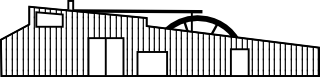
In 1915 the first turbine was installed to replace the stamps waterwheel to be replaced in turn by the current Turgo Impulse Wheel in 1920. Also during the 1920's, compressed-air rock drills were tried, but due to the soft nature of the ore, water dust-suppression could not be used for fear of washing the valuable material away. As a result, the miners suffered from silicosis. A Blackstone Oil Engine was installed in 1934, to supplement the water power during the dry summer months.

Kelly miners standing near the shaft in 1907. A map from this period is here.
(Photo reproduced courtesy of Lustleigh Community Archive)
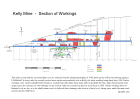
In October 1944 the mine was recorded as being closed, probably as a result of wartime labour shortages and exhaustion of the ore reserves. An abandonment plan, drawn up in 1946, exists; click on the appropriate thumbnail below.
 |
 |
Around 1947 the ore-processing plant was brought back into use by the company then operating the Pepperdon Mine some way up the valley near Moretonhampstead. New underground workings were opened to the south-west of Kelly on the westward extension of the old Hawkmoor Mine lodes, and this working became known as Slade Mine (see map). The ore was trucked to Kelly for processing before being despatched to the modern finishing and drying plant at Pepperdon. In 1951 blasting on the supposedly new lode broke into unrecorded 'old men's workings'. This was soon followed by a major underground collapse, fortunately at night, which brought mining to an end. The company never recovered from these setbacks and both Kelly and Pepperdon Mines were abandoned.
When a mine finally closed it was usual to sell off the equipment, either for its scrap value or for use on another mine. However, due to a legal dispute, the site at Kelly was left untouched for many years. This resulted in what is now a unique collection of mining machinery still remaining on its original site.
For audio files of interviews with former Kelly Miners: Click here.